Montgomery, Alabama carries two entirely contradictory nicknames simultaneously: the “Cradle of the Confederacy” and the “Birthplace of the Civil Rights Movement.” The same city that served as the first capital of the Confederate States in 1861 later became the site of the Montgomery Bus Boycott and the endpoint of the Selma-to-Montgomery marches, a genuinely striking historical whiplash packed into one Alabama capital that this area code now represents.
South-Central Alabama, At a Glance
| Category | Details |
| State | Alabama, USA |
| Coverage Area | Montgomery, Dothan, Auburn, Selma |
| Went Into Service | 1995 |
| Time Zone | Central Time (CST: UTC-6 / CDT: UTC-5) |
| Overlay Code | 483 |
| Split From | 205 |
A Split Timed to Alabama’s Growing Demand
334 broke away from 205 in 1995, a forward-thinking move at the time that gave south-central and southeastern Alabama its own dedicated numbering territory rather than continuing to share capacity with Birmingham’s metro area far to the north. That decision ensured this considerably more rural and agricultural stretch of the state wouldn’t compete for the same numbering pool as Alabama’s largest industrial city.
A Capital City Built on Contradiction
Montgomery replaced Tuscaloosa as Alabama’s state capital in 1846, and its history since then reads almost like two separate storylines. The 1851 Alabama State Capitol building, sitting on what locals call Goat Hill, hosted the first Confederate Congress in February 1861. Roughly a century later, that same building marked the endpoint of the 1965 Selma-to-Montgomery march, a defining moment of the civil rights era. Today, the Civil Rights Memorial, designed by Maya Lin outside the Southern Poverty Law Center, and the National Memorial for Peace and Justice both sit within walking distance of that same capitol, making Montgomery one of the few American cities where visitors can trace both sides of that historical contradiction on foot.
Peanuts, Cotton, and the Wiregrass Region
Move southeast toward Dothan, and this code’s character shifts entirely from political history to agriculture. This corner of Alabama, known locally as the Wiregrass region, has built its economy around peanut and cotton farming for generations, celebrated annually through Dothan’s National Peanut Festival, which draws crowds from well beyond the county line every fall.
Where This Code Actually Reaches
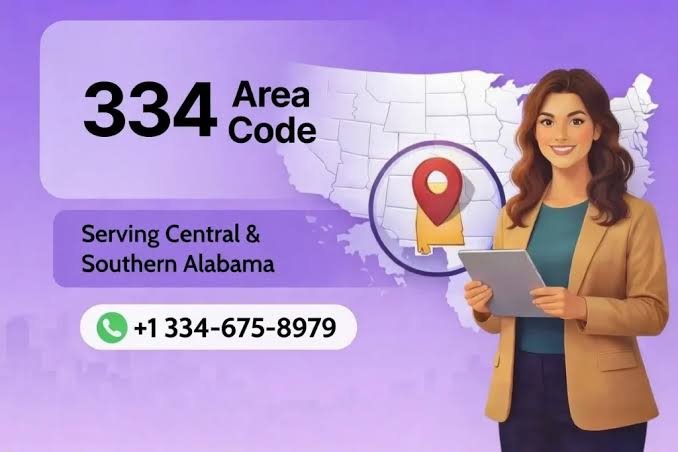
334 spans a genuinely wide stretch of south-central and southeastern Alabama:
- Montgomery, the state capital and largest city in this territory
- Auburn and Opelika, anchored by Auburn University
- Dothan, Enterprise, and Ozark in the Wiregrass region
- Selma and Eufaula further west and southeast
Auburn in particular carries its own distinct identity, built around the university rather than government or agriculture, giving this code a genuinely varied mix of college town, capital city, and farming community economies.
An Economy Built on Government, Defence, and Manufacturing
Maxwell Air Force Base anchors a substantial military and aerospace presence in Montgomery, while manufacturers including Hyundai Motor Manufacturing Alabama, Rheem Manufacturing, and International Paper have established significant operations across this territory. Montgomery has also drawn national attention for urban revitalisation efforts, becoming one of the first American cities to implement SmartCode Zoning as part of a broader downtown redevelopment push.
Why 483 Is Joining as an Overlay
Continued demand across this territory eventually pushed 334’s numbering pool toward the point where regulators approved a new overlay, 483, scheduled to activate in February 2026. Both codes will share identical south-central and southeastern Alabama territory once the overlay goes live, following the same pattern seen across most growing American regions that have already exhausted their original numbering supply.
Frequently Asked Questions
Q1. How can Montgomery genuinely be known as both the “Cradle of the Confederacy” and the “Birthplace of Civil Rights”?
Both nicknames reflect real, documented history at the same physical location. Montgomery served as the Confederacy’s first capital starting in 1861, and just over a century later became central to the civil rights movement through the Montgomery Bus Boycott and the Selma-to-Montgomery marches, both converging on the same State Capitol building.
Q2. Does a 334 number mean the caller is more likely connected to agriculture or to government?
It depends entirely on which part of the territory they’re in. Montgomery leans heavily toward government, defence, and manufacturing, while Dothan and the surrounding Wiregrass region are built around peanut and cotton farming, so the code alone doesn’t indicate which economy the caller belongs to.
Q3. Why is a new overlay, 483, being introduced if 334 isn’t expected to exhaust its numbers soon?
Regulators typically approve overlays well ahead of actual exhaustion to avoid last-minute disruption, and continued growth across Montgomery, Auburn, and the surrounding region has pushed planners to introduce 483 as a precautionary measure before the numbering pool genuinely runs low.
Q4. Can a business outside Alabama get a 334 number to establish a Montgomery or Auburn presence?
Yes, virtual number providers commonly issue 334 numbers to businesses anywhere, letting them establish a south-central Alabama presence for manufacturing, agriculture, or general business outreach without needing a physical office there.