Most area codes last decades before needing relief. Maryland’s 410 lasted just six years. Split away from 301 in 1991 to cover Baltimore and Eastern Maryland, it ran headlong into the cell phone revolution of the mid-1990s so fast that regulators had to introduce 443 as an overlay by 1997, one of the quicker exhaustion timelines recorded anywhere in the country.
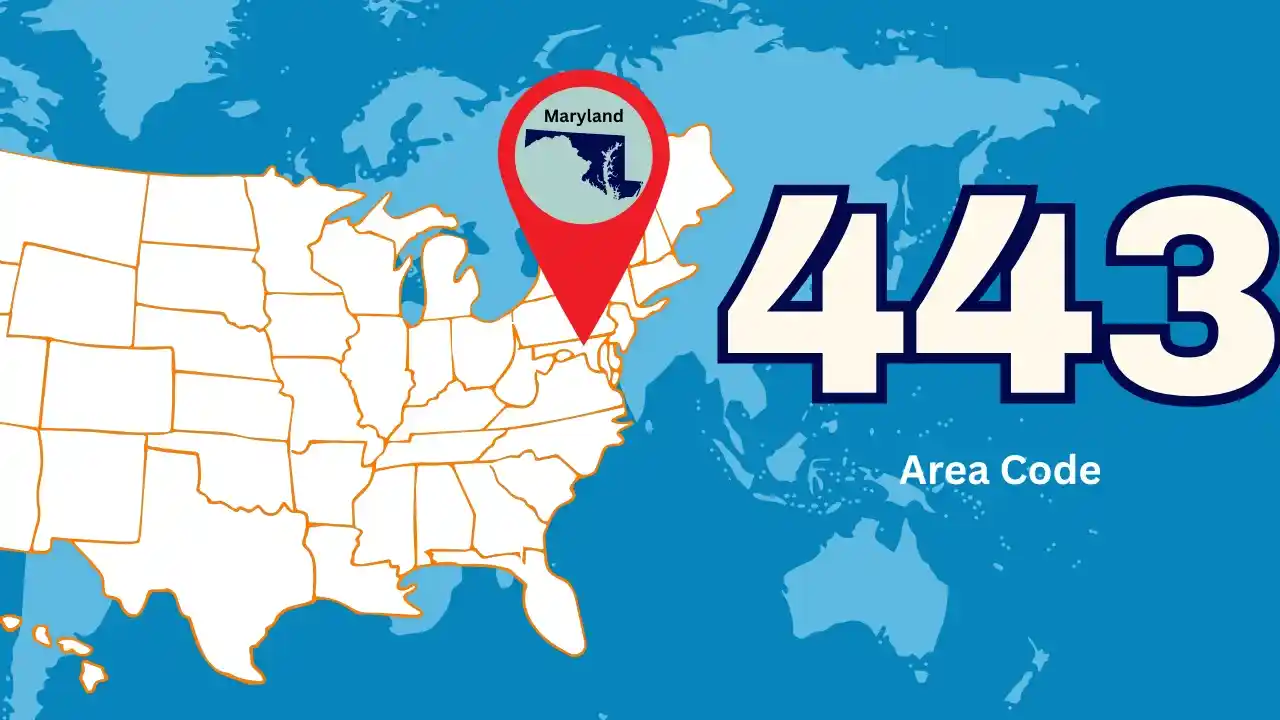
Eastern Maryland, At a Glance
| Category | Details |
| State | Maryland, USA |
| Coverage Area | Baltimore, Columbia, Glen Burnie, Annapolis |
| Went Into Service | July 1, 1997 |
| Time Zone | Eastern Time (EST: UTC-5 / EDT: UTC-4) |
| Overlays With | 410, 667 |
| Split Origin | 410 split from 301 in 1991 |
A Region That Burned Through Numbers Faster Than Expected
410’s story begins with a straightforward geographic split in October 1991, when the Washington DC suburbs in Montgomery and Prince George’s counties, drowning in fax machines, pagers, and population growth, kept 301 for themselves while Eastern Maryland, including Baltimore and the Eastern Shore, received the new 410 code. What nobody quite anticipated was how quickly mobile phones would spread through that same territory over the following six years. By 1997, Maryland’s Public Service Commission had already approved 443 as an overlay rather than force millions of subscribers through yet another disruptive geographic split.
Three Codes, One Identical Territory
Baltimore’s metro area now runs on three simultaneously active codes, 410, 443, and 667, all covering the exact same Eastern Maryland geography with no code representing a distinct neighbourhood or district. Whether you’re calling Johns Hopkins, the Inner Harbor, or a restaurant in Canton, you’re dialling one of these three interchangeable prefixes, and ten-digit dialing has been mandatory across the region since the overlay system took hold.
A Million and a Half Visitors a Year, Every Year
Baltimore’s National Aquarium, which opened in 1981, draws roughly 1.5 million visitors annually, a genuine tourism anchor sitting right at the Inner Harbor within this code’s core territory. That consistent draw reflects Baltimore’s broader identity as a working port city that’s successfully built a tourism economy around its waterfront alongside its more traditional industrial and shipping roots.
Where This Code Actually Reaches
443 spans a genuinely wide stretch of Eastern Maryland, covering roughly 17 counties:
- Baltimore city and Baltimore County
- Columbia, a planned community known for diverse demographics and strong schools
- Annapolis, Maryland’s state capital
- Glen Burnie, Ellicott City, and Dundalk
Columbia in particular stands out as a deliberately designed community rather than an organically grown town, built specifically around integrated neighbourhoods and a thriving local business sector.
An Economy Anchored by Healthcare, Cybersecurity, and Shipping
Johns Hopkins University and its associated hospital system anchor substantial healthcare and research employment within this territory, while Maryland’s proximity to federal agencies has fed a growing cybersecurity and professional services sector, particularly around the Baltimore-Washington corridor. Add the Port of Baltimore’s ongoing shipping activity, and this code covers a genuinely diversified economic base beyond its historical manufacturing identity.
Why a Third Code Joined in 2012
Even with 443 in place, continued smartphone adoption and business growth eventually pushed the combined 410/443 numbering pool toward its own limits, leading regulators to introduce 667 as a third overlay in 2012. All three codes have functioned identically and simultaneously across Eastern Maryland ever since, with no functional distinction between them for calling, billing, or service quality.
Frequently Asked Questions
Q1. Why did 410 need an overlay after only six years, when many area codes last decades?
The mid-1990s cell phone boom hit Eastern Maryland particularly fast, and combined with continued population growth, it exhausted 410’s numbering pool considerably sooner than regulators had originally projected when the code split from 301 in 1991.
Q2. Does it matter which of the three Baltimore-area codes, 410, 443, or 667, I get assigned?
No. All three overlay the exact same Eastern Maryland territory and function identically for calls, texts, billing, and business registration, so there’s no practical difference beyond which happened to be available when a number was registered.
Q3. Is a 443 number less legitimate than an older 410 number for a Baltimore business?
Not at all. Both are equally recognised and equally common across the region, and 443 has been active since 1997, giving it nearly three decades of established use in its own right.
Q4. Can a business outside Maryland get a 443 number to establish a Baltimore presence?
Yes, virtual number providers commonly issue 443, 410, or 667 numbers to businesses anywhere, letting them establish an Eastern Maryland presence for healthcare, cybersecurity, or general business outreach without needing a physical office there.