The 773 area code covers ground where two entirely different revolutions happened: house music, the genre that would reshape dance floors worldwide, was born in clubs within this territory, and just a few miles away, scientists achieved the first controlled nuclear chain reaction in history, quietly launching the atomic age from a squash court underneath a University of Chicago stadium. Few area codes anywhere can claim both a musical genre and a scientific era as part of their origin story.
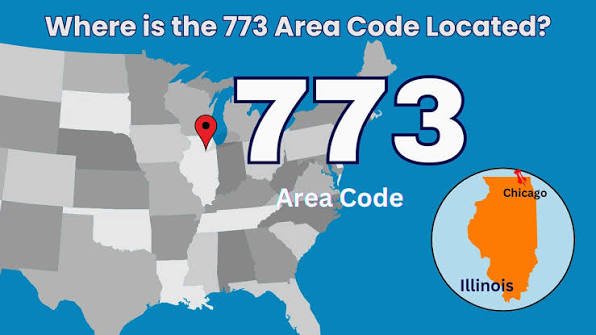
Chicago’s Residential Neighbourhoods, At a Glance
| Category | Details |
| State | Illinois, USA |
| Coverage Area | Lincoln Park, Wicker Park, Hyde Park, Bronzeville |
| Went Into Service | October 12, 1996 |
| Time Zone | Central Time (CST: UTC-6 / CDT: UTC-5) |
| Overlay Code | 872 |
| Split From | 312 |
Inheriting the City Beyond Downtown
When the Illinois Commerce Commission split 312 in October 1996, downtown Chicago kept the original code within a compact 16-square-mile core bounded roughly by North Avenue, Western Avenue, 31st Street, and Lake Michigan. Everything else, the vast majority of the city’s residential fabric, became 773. That split meant this code inherited where Chicago actually lives, rather than where it works.
A Neighbourhood System Unique in America
Chicago’s 77 official community areas, a formal designation created by University of Chicago sociologists back in the 1920s, mostly fall under this code’s territory. That’s a genuinely unusual approach to city planning, few American cities maintain such a systematic, academically-defined neighbourhood structure, and it gives 773 a documented, almost anthropological relationship to how Chicago understands its own geography.
The Squash Court That Started the Atomic Age
Beneath the stands of a University of Chicago football stadium in Hyde Park, physicist Enrico Fermi and his team achieved the world’s first controlled, self-sustaining nuclear chain reaction in December 1942, a milestone that directly enabled the Manhattan Project and reshaped global history. That site sits squarely within this code’s Hyde Park territory, the same neighbourhood that later became home to Barack Obama before his presidency.
Where House Music Actually Began
This code also covers the clubs and neighbourhoods where house music emerged in the early 1980s, a genre that would go on to influence dance music worldwide from its origins in Chicago’s underground scene. Layer that alongside Wrigleyville’s ivy-covered ballpark and Bronzeville’s historic blues clubs, and this territory covers a genuinely disproportionate share of American musical innovation for a single area code.
Where This Code Actually Reaches
773 spans the bulk of Chicago’s neighbourhood fabric across the North, West, and South Sides:
- Lincoln Park, Lakeview, and Wrigleyville on the North Side
- Wicker Park and Logan Square on the Northwest Side
- Hyde Park and Bronzeville on the South Side
- Pilsen and Humboldt Park further west
Pilsen in particular carries a strong Mexican-American cultural identity, adding another distinct layer to a code already spanning academic history, musical innovation, and sports culture.
Tavern-Style Pizza, Not Deep-Dish
Here’s a detail that surprises visitors expecting Chicago’s famous deep-dish everywhere: many longtime residents within this code actually favour tavern-style pizza, a thin-crust, party-cut version that locals argue is the more authentic everyday Chicago meal, deep-dish being more of a tourist-facing specialty than a daily habit.
Why 872 Joined as an Overlay in 2009
Continued residential growth eventually pushed both 312 and 773’s numbering pools toward exhaustion, and regulators introduced 872 as an overlay covering both codes simultaneously starting November 2009. Unlike 773, which maps to a specific ring of neighbourhoods, 872 doesn’t correspond to any particular part of the city, it simply signals Chicago generally.
Frequently Asked Questions
Q1. Is it true that the atomic age genuinely began within this area code’s territory?
Yes, this is documented history. Enrico Fermi’s team achieved the first controlled nuclear chain reaction beneath a University of Chicago stadium in Hyde Park in December 1942, a site that falls within 773’s coverage area today.
Q2. Does a 773 number mean the caller lives in downtown Chicago?
No, generally the opposite. Downtown Chicago’s Loop kept the original 312 code during the 1996 split, while 773 covers the residential neighbourhoods surrounding that compact downtown core.
Q3. Why does Chicago maintain 77 formally designated community areas rather than informal neighbourhood names?
This system originated from University of Chicago sociologists in the 1920s, who created a structured framework for studying the city’s neighbourhoods, a designation that’s persisted for a century and remains unusual among American cities.
Q4. Can a business outside Illinois get a 773 number to establish a Chicago presence?
Yes, virtual number providers commonly issue 773 or 872 numbers to businesses anywhere, letting them establish a residential Chicago neighbourhood presence for retail, hospitality, or general business outreach without needing a physical Illinois office.