Houston’s Astrodome once had a mosquito problem so persistent that engineers ended up inventing an entirely new product to solve it: artificial turf, later branded AstroTurf, born specifically because the stadium’s real grass couldn’t survive without enough sunlight and the standing water it needed was breeding insects by the thousands. That’s the kind of oddball engineering ingenuity baked into this city’s identity, and it’s exactly the culture surrounding the suburbs this particular area code was created to serve.
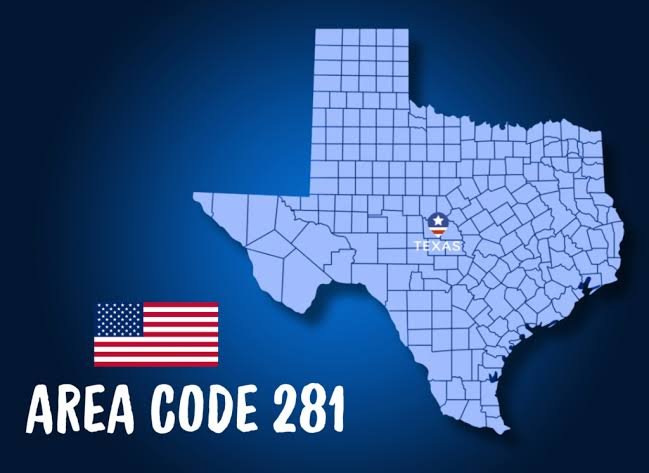
Houston’s Suburban Ring, At a Glance
| Category | Details |
| State | Texas, USA |
| Coverage Area | Suburbs outside Beltway 8 — Sugar Land, Katy, The Woodlands |
| Went Into Service | November 2, 1996 |
| Time Zone | Central Time (CST: UTC-6 / CDT: UTC-5) |
| Shares Territory With | 713, 832, 346, 621 |
| Coverage Span | Roughly 3,000 square miles |
Drawing the Line at Beltway 8
When 281 launched in 1996, regulators drew its boundary along a specific, tangible landmark: Beltway 8, the highway loop encircling Houston. Everything inside that ring largely kept the original 713 code, while the booming suburban growth outside it, communities that barely existed a generation earlier, received this new designation instead. That geographic logic held for only about two years before growth outpaced even this expanded system, eventually requiring the boundary to be erased entirely in 1999 when 832 arrived as a full overlay.
Mission Control’s Home Address
League City and the surrounding communities under this code host NASA’s Johnson Space Center, the actual home of Mission Control for American spaceflight. There’s a persistent piece of trivia connected to this facility worth knowing: the most famous phrase in space history, Neil Armstrong’s “one small step for man,” is widely believed by linguists and NASA historians to have been a misquote, missing the crucial word “a” that would have made the sentence grammatically complete. Whether static garbled the transmission or Armstrong simply dropped the word in the moment remains debated, but the phrase has stuck in its imperfect form regardless.
A City That’s Voted Against Rules Three Times
Houston holds a distinction shared by no other major American city: voters have rejected formal zoning regulations on three separate occasions. That reluctance to impose top-down land-use rules has shaped how development sprawled outward into exactly the kind of master-planned suburban communities that now define this code, since builders had far more flexibility to create self-contained developments like The Woodlands and Sugar Land than they would have under a traditional zoning framework.
The Communities Making Up This Ring
281 stretches across a genuinely vast suburban footprint surrounding central Houston:
- The Woodlands and Spring to the north
- Sugar Land, Katy, and Missouri City to the west and southwest
- Pearland and Friendswood to the south
- Baytown, Deer Park, and La Porte along the industrial eastern corridor
This span covers roughly 100 miles north to south and 80 miles east to west, encompassing everything from master-planned suburban developments to working-class industrial towns along the ship channel.
An Economy Anchored by Energy, Medicine, and Rockets
The energy sector remains the dominant economic force across this territory, but it’s far from the only one. The Texas Medical Center draws healthcare specialists and researchers from across the world, while NASA’s presence supports a genuine aerospace ecosystem layered on top of the oil and gas industry. Add strong public school districts and proximity to Rice University and the University of Houston system, and this code’s suburbs have become genuinely attractive to families relocating specifically for career opportunities across multiple industries at once.
Living Inside a Five-Code System
Houston now shares its numbering territory across five separate codes, 713, 281, 832, 346, and 621, all covering identical geography. Few American metros have needed this many overlapping codes, a direct reflection of how relentlessly the region has grown since the original 1947 numbering plan first assigned Houston a single area code.
Frequently Asked Questions
Q1. Is it true that AstroTurf was invented specifically because of a mosquito problem in Houston?
Yes, this is a documented origin story. The Astrodome’s real grass couldn’t get enough sunlight to survive, and the standing water needed to keep it alive created a mosquito breeding problem, leading engineers to develop artificial turf as a practical solution.
Q2. Why did regulators choose Beltway 8 specifically as the original dividing line for this code?
Beltway 8 offered a clear, recognisable geographic landmark that closely tracked where Houston’s older urban core ended and its rapidly growing suburban development began, making it a practical choice for splitting the numbering territory in 1996.
Q3. Does a 281 number always mean the caller is in one of Houston’s wealthier suburbs?
Not necessarily. While areas like Sugar Land and The Woodlands carry affluent reputations, this code also covers considerably more industrial, working-class communities like Baytown and Deer Park along the ship channel.
Q4. Can a business outside Texas get a 281 number to reach Houston’s suburban market specifically?
Yes, virtual number providers commonly issue 281 numbers to businesses anywhere, letting them establish a presence for real estate, healthcare, or general business outreach targeting Houston’s suburban communities without needing a physical Texas office.